
Laboratory of Applied Mycology and Phenomics
Cultivating science, nurturing growth: innovative biocontrol and automated phenomics for sustainable agriculture.
About us
LAMP Research Initiative
Developing healthy, resilient crops in the face of climate change. By integrating phytopathology, biocontrol, and advanced phenomics and spectral technologies, we translate scientific discoveries into practical solutions for society.
Phenomics & Spectral Imaging
Multi- and hyperspectral precision agriculture: detecting plant stress and disease early through imaging technology.
Applied Mycology
Research into fungi and plant-pathogen interactions, focusing on pathogens such as Fusarium and Phytophthora in agricultural crops.
Biocontrol & Priming
Sustainable crop protection by activating the plant's own immune system ('priming') and deploying microbial antagonists — 'sweet immunity'.
Valorization & Services
Collaboration with industry through CropFit Services: bioassays and services that bring research into practice.
The Team
Principal Investigator

Postdoctoral Researchers




Technical & Operations


Jarno van de Geuchte
Lab technician (2025–present)
PhD Students


Fien Drijvers
PhD researcher




Louka Noyen
PhD researcher

Jing Liu
PhD researcher




Nerea Castineira Rial
PhD researcher


Our Projects
Phytopathogenic fungi are significant contributors to crop losses worldwide. Currently, synthetic pesticides are still widely used in their control, although concerns regarding environmental and human health are pushing a gradual replacement by novel and safe pest control platforms. In particular, spray-induced gene silencing, a type of RNAi-based control avoiding genetic modification issues, has gained interest. However, various fungal species show insensitivity to this approach. Additionally, dsRNA degrades rapidly in open environments, necessitating protective measures. In this context, nanoparticle formulations, for instance with polycationic methacrylate polymers, have emerged as a research focus, yielding promising results. This project proposes a strategy combining the cell wall-degrading activity of antifungal enzymes and protective effects of guanidinylated methacrylate polymers to enhance the sensitivity and functionality of RNAi-based fungal control. The antifungal enzyme approach is hypothesised to weaken the fungal cell wall, facilitating nanoparticle entry. To ensure reliable activity near the nanoparticle, the objective is to stably couple the enzymes to the polymers through strong covalent bonds. In addition, the polymer component is expected to condense the dsRNA cargo and provide a positive surface charge to promote cellular uptake, and protect the cargo from environmental stressors without displaying non-target toxicity.
This project aims to resolve knowledge gaps in the mechanisms underlying polyploidisation and hybridisation in haplodiplontic macroalgae, and their effect on genotype and phenotype, through cross-breeding several Porphyra species. By linking hybridisation and polyploidisation mechanisms, genetic distance, hybrid viability, phenotypic performance including disease resistance, and gene expression in synthetic Porphyra hybrids, the project aims to capture the full conceptual picture of hybrid systems in haplodiplontic life cycles, and to generate actionable insights for improved breeding of seaweeds.
Project details to follow.
This project validates the RhizoBac biofertilizer to boost groundnut yields, reduce aflatoxin contamination, and improve food safety. It optimizes formulation stability, evaluates field performance, monitors plant health through multispectral imaging, and analyzes microbial interactions via metabarcoding. By integrating biological solutions, the project promotes sustainable agriculture and strengthens food security for smallholder farmers in Zimbabwe and beyond.
To address the growing need for high-throughput plant imaging, we propose acquiring a compact variable pressure SEM that combines fast, high resolution imaging and user accessibility in a single powerful platform. This SEM will allow researchers to perform imaging independently after minimal training. It will be housed in a facility specialized in plant-specific sample preparation, providing a range of SEM high-throughput workflows based on vibration, rotary, sledge, ultramicrotomy and cryostat microtomy techniques. Acquired automated sample preparation tools will enable consortium members to critical point dry and sputter coat their samples independently, freeing the appointed part-time staff member to focus on managerial tasks, supporting basic experimental design, maintenance and easy trouble shooting, all with full attention to data quality and scientific integrity. The compact SEM will be closely integrated with UGent’s existing high-end SEM imaging platforms (Cryo-SEM, eSEM, EDX-SEM and Volume SEM), facilitating a seamless workflow from initial screening to detailed analysis. This tiered approach optimizes the use of time, funding and equipment. The consortium unites researchers from phytopathology, (eco)physiology, molecular biology, plant evolution, archaeology and microbiology. In today’s increasingly interdisciplinary research landscape, bringing together diverse expertise around plant materials will foster collaboration and drive innovation.
A UGent spinoff is in development to give growers real-time insight into the nutrient status of their crops. Through spectral technology, we measure the interaction between light and leaves to detect nutrient problems earlier. This innovation aims to redefine the decision-making process around fertilization by enabling more precise nutrient management. Based on a proof-of-concept in the Champagne region, this project will serve to increase and test the scalability of Metiris by supporting the development in a number of new crops.
Hyperspectral sensing enables rapid and accurate quantification of phenotypic traits for plant breeding and plant heath monitoring using non-invasive methods. Although hyperspectral sensing is developing rapidly globally, it has not been utilized extensively in Africa. This project aims to redress this imbalance by transferring essential skills to South Africa (SA), leveraging recent advancements in hyperspectral sensors, increased accessibility of AI for data processing, the FABI-URC satellite lab Remote Sensing of Plant Health and new government funded phenotyping infrastructure at the University of Pretoria (UP). The project's central goal is to develop local skills and capacity through partnerships with Ghent University to establish hyperspectral sensing technologies for deployment in plant breeding and remote sensing. Transferable skills are not limited to hyperspectral sensing, but include training in big data management and processing.
PhD research by Dylan Cool, supervised by Tina Kyndt.
This project investigates the evolutionary and pathobiological dynamics of Sarocladium species associated with rice, particularly within the "Sarocladium oryzae species complex" (SOSC). SOSC includes the species S. oryzae, S. sparsum, and S. attenuatum that range from mutualistic endophytes to necrotrophic pathogens causing the devastating rice sheath rot disease. Our study aims to unravel the genomic, metabolomic, and viromic factors driving this lifestyle continuum. Using 21 SOSC strains from diverse origins, we will conduct comparative genomics to identify elements underpinning pathogenicity, morphological plasticity, and transitions between endophytic and necrotrophic phases. Untargeted metabolomics will profile specialized metabolites that influence pathogenicity. We will explore environmental triggers affecting their production and assess potential antimicrobial bioactivities. Concurrently, viromics will examine the presence and impact of mycoviruses, hypothesized to affect SOSC phenotypic diversity and pathobiology. Promising hypovirulent viruses may also serve as biocontrol agents to control rice sheath rot. This integrative approach seeks to clarify the molecular basis of pathogenicity, lifestyle shifts, and microbial interactions in SOSC, providing novel insights into fungal evolution and sustainable crop protection strategies.
Chemical communication via specialized metabolites determines interactions between fungi and plants. Fungi possess a metabolite treasure trove, with potent applications for agriculture and human health, yet the vast majority awaits discovery, typically because their biosynthesis is silent in lab conditions. Within this GOA project, we will establish a plant-based platform to discover, characterize and produce yet unknown fungal metabolites.
Recent technological advances have improved our understanding of complex living systems, such as humans, animals, and crops, by studying their genetic information and how it is expressed. By examining genes and molecules in individual cells, we have discovered cellular variations and even identified previously unknown cell types. However, current technology has limitations. It lacks sensitivity, potentially missing important information, and it is expensive and time-consuming to use. Moreover, exciting applications like mapping genetic changes in cancer or studying specific DNA modifications are not supported by existing tools. To address these challenges, we propose acquiring a new equipment that can produce customized materials for genetic analysis. This equipment, called a photolithographic printer, can create thousands of different DNA molecules at high resolution. These molecules can be used to fabricate solid surfaces with specific DNA patterns, enabling detailed genetic analysis of tissues. Alternatively, the DNA molecules can be released from the solid surface for solution-based analysis. This technology allows us to study large tissue areas and analyze genetic information at single-cell level. It also enables research on organisms lacking appropriate tools. Additionally, it facilitates the study of different RNA molecules, including those that are typically overlooked but may have important functions, such as non-polyadenylated long non-coding RNAs.
Macroalgae or seaweeds are internationally recognized as an essential link in the development of a circular bioeconomy and are as such specifically mentioned in EU policy such as the Green Deal, Farm to Fork, and the EU4Algae initiative. The GAME project will address knowledge gaps that impede current valorisation of European Porphyra, a genus of red algae that is farmed at large scale in Asia for human food (nori), but Porphyra has also potential for use in various biotechnological applications, including the production of bioactive compounds, food additives, and renewable energy. GAME will leverage from Porphyra‘s inter- and intra-specific genetic and biochemical variability to elucidate the mechanisms behind bioactive metabolite production (phycobiliproteins, sulfated polysaccharides and mycosporine-like amino acids (MAA), flavonoids and other important bioactive compounds), tailored to applications as nutraceuticals, biostimulants UV protectans for crops, and biocontrol products. The innovation lies in using linking biological processes (growth, reproduction, secondary metabolite production) with state-of-the-art genetics and demonstrating the action of bioactive metabolites as nutraceuticals and agricultural-biologicals. The research of GAME will lead to targeted life cycle control and cultivation protocols. Tailor-made extraction techniques including pre- and post-harvest treatments for the preparation of Porphyra extracts which will be developed using in-house protocols (HPLC, UV/vis, FTIR multivariate analysis) to elucidate and enhance the bioactivity of extracts for targeted applications. Differentiation in extract composition is made by applying multiple postharvest treatments. The extracts will be validated for their application potential: 1. Nutraceuticals: applying Caco2 cell lines for digestive uptake assays using (i) raw extracts, (ii) digested extracts using method in vivo digestion (oral, gastric and intestinal phases) and (iii) other isolated compounds of interest. 2. High value agricultural-biologicals: (i) Phycobiliproteins (antifungal), (ii) sulfated polysaccharides (resistance induction) and (iii) MAAs (protection against heat/UV-stress due to combined UV blocking and expected biostimulant activity). 3. Biostimulants and bio-based fertilizers: The residue left after processing of the seaweed will be a valuable biostimulant, soil conditioner (cell wall residue as a source of soil organic matter) and fertilizer.
PhD research by Judith Mavungu Muzulukwau, supervised by Noémie De Zutter, Geert Haesaert.
Plant pests and pathogens damage agricultural production and endanger food security. Their control relies heavily on the use of synthetic insecticides, leading to a negative environmental impact. Developing new methods for pest and pathogen control is therefore essential to safeguard human health and meet the challenge of increasing crop yields, while reducing the use of chemical pesticides. The overarching objective of the NextGenBioPest project is to meet this need by delivering novel and improved products, methods, and practices for the rational control of the most difficult-to-manage arthropod pests and pathogens, with substantially reduced pesticide use. The project will provide a new toolkit for plant protection in key vegetable and fruit crops including diagnostics for pest and pathogen identification and incrimination, novel Biological Control Agents and methods to augment their performance in the field, RNA-based pesticides, Low Risk/Green chemicals, plant resistance inducers and innovative agronomic and ecological practices. These innovations will be integrated with existing approaches, to achieve effective, environment friendly and sustainable crop protection. They will be validated in large field studies, with both their efficiency and socioeconomic impact assessed. Demonstration fields, extensive training and modern targeted communication channels, will enable the appropriate dissemination and uptake of the outcomes to the stakeholders and end users. Data protection and commercialization strategies will ensure their exploitation. These goals will be achieved by integrating leading institutional and industrial partners with drivers of pest control programs. The multidisciplinary and multi-actor team will exploit their diverse expertise, access to extensive preliminary data and resources, and strong networks, to meet the project objectives and ensure the knowledge and tools generated deliver economic, ecological and societal impact.
Plant pathogens do not operate alone but can form synergistic interactions in disease complexes. This has important implications for diagnosis, epidemiology and disease management. Here we use Fusarium/Sarocladium interactions in the rice sheath rot disease complex as a model to gain more insight into their within-host interplay and implications on virulence and in planta mycotoxin production. Our prior research has shown that in planta these fungi mainly produce the mycotoxins zearalenone and enniatin which pose risks for animal and human health. Moreover, co-infection has a strong influence on mycotoxin production. We will also use this model to study virulence evolution by investigating the effects of co-infection on horizontal and vertical pathogen transmission. Representative genomes from Saroclarium and Fusarium available in our culture collection will be sequenced and mined for mycotoxin biosynthetic gene clusters. Co-inoculation experiments will be done to investigate the effects on panicle formation and seed set. Plant colonization and toxin expression and production in planta will be assessed. Mycotoxin mutants will be generated to study their role in the interaction and pathogenicity. We will also test the effect of co-inoculations on other rice diseases, such as rice blast caused by Pyricularia oryzae.
Biotalys' AGROBODY VHHs will be fused with chitinases and glucanases that degrade the cell wall of fungi (direct antifungal activity) or with chitin deacetylases that activate the immune system of plants. It will be explored whether this concept (AgroFUNzymes) can lead to innovative biological crop protection agents against the following pathogens: Fusarium graminearum, Botrytis cinerea and Podosphaera xanthii on 3 different crops. The end result is a new platform and lead AgroFUNzymes evaluated in a greenhouse trial.
The AlgaeProBANOS project addresses a challenge in the Baltic and North Sea (BANOS) area: how to harmonise economic development with social and environmental goals in line with the Mission Ocean... There is a rising demand for green healthy natural consumer and biobased products, and algae can become the biomass resource of the future, without using fresh water, arable land, or added fertilisers and or pesticides. Both the Baltic and North sea engulf the necessary conditions to scale up production and produce both commodity and sophisticated algae-based products. AlgaeProBanos (APB) brings together 26 experts and industry partners from the BANOS area and beyond, to accelerate product development and market access of sustainable algae solutions. Concretely, APB will support six business pilots, SMEs and startups, to bring eight algae products to the market (TRL7-9) namely in food, feed, nutraceuticals, textiles, cosmetics and plant biostimulants applications. Value chains are based on microalgae and seaweeds, sourced in the Baltic or North Sea or from recycled resources. Innovation takes place in iterative loops with assessments to secure maximum robustness, efficiency, and sustainablesustainability. Furthermore value chains are built with end-users' needs put in the centre, through engaging users in co-creation activities, to ensure maximum uptake. Digital tools are developed to support all actors from biomass producers to consumers. In the end, GoToMarket strategies are tailored to the pilots, providing a trajectory to reach the market. In a meta level, the Algae Accelerator develops new and aggregates existing knowledge, and develops a portfolio of solutions, guidelines and a collaboration and training platform, to benefit the entire algae industry and nourish it into a thriving industry by 2050. The legacy of APB will be deposited to the Ocean Mission BANOS and the EU4Algae.
A platform where innovative plant bioassays are brought together to evaluate the next generation of sustainable crop protection products, fertilizers and biostimulants from academia and industry using latest state of the art infrastructure, innovative protocols and in-depth expertise.
PhD research by Chloë Schoorens, supervised by Noémie De Zutter.
PhD research by Jelle Van Vooren, supervised by Willem Desmedt, Sven Mangelinckx.
MyCoView aims to develop innovative, non-invasive mouldy core (MC) detection methodologies improving food safety and security in apple by relating MC lesion with mycotoxin contamination. For the first time, mass spectrometry and hyperspectral imaging with a machine learning (ML) approach will be combined to achieve a novel detection methodology. While the fields of hyperspectral imaging and plant-pathogen interaction are maturing, the integration of these interdisciplinary fields with mycotoxin research and ML is still challenging. Despite these challenges, such ambitious fusion greatly contributes to food safety and food security. MyCoView will increase food safety and food security by preventing the storage of latently infected MC apple fruit and by tackling mycotoxin contamination in apple products, thereby contributing to improved human health. This aim will be address by a multistrategy approach following these research objectives: 1) To investigate the metabolic plant-pathogen interactions and production of secondary metabolites by Alternaria spp. in apple using high resolution mass spectrometry (HRMS). 2) To quantify the production of the main Alternaria mycotoxins in apple and their accumulation over time when causing MC. 3) To develop accurate ML models to prevent the storage of latently infected MC apples and their further processing combining hyperspectral imaging and mass spectrometry.
PhD research by Louka Noyen, supervised by Olivier De Clerck, Jessica Knoop.
PhD research by Ellen Everaert.
PhD research by Robin Daenen, supervised by Pascal Boeckx, Nico Boon, Jo Dewulf, Mingsheng Jia.
Supervised by Wouter Maes.
There is an increased pressure on crop production due to population increase projections. This coupled with the need to reduce agrochemicals use in agricultural practices, require sustainable intervention in crop production. To reduce the environmental impact of chemical fertilizers, while securing crop yield and consumers safety, several alternative and sustainable products including biostimulants are currently available in the market. Nevertheless, this is still insufficient, new, sustainable, and eco-friendly products need to be discovered. The project aims to pave the path for a biostimulant derived from Belgian endive root by-product. Water extracts of these roots were shown to stimulate root and shoot growth (SBO-FWO project BIO2BIO). Further studies will focus on the enrichment and chemical characterization of the bioactive ingredients. The bioactivity enriched fractions will be used to study the local and systemic physiological response of Arabidopsis seedlings to treatments. A comparative transcriptome study will be conducted to identify a core selection of genes that are regulated upon biostimulant treatment. The potential of endive roots extract as a biostimulant will be assessed by performing open field and pot experiments.
PhD research by Jing Liu, supervised by Sarah De Saeger, Trang Tran Minh.
PRIMO focuses on the biocontrol of potato (Solanum tuberosum) against the oomycete Phytophthora infestans using volatile organic compounds (VOCs). The green leaf volatile Z3-hexenyl acetate (Z3-HAC) was shown to be a potent priming agent against P. infestans in potato.
PhD research by Fien Drijvers, supervised by Leen De Gelder.
PhD research by Halimat Yewande Ogunsanya, supervised by Danny Geelen, Sven Mangelinckx.
News & Publications
Latest news
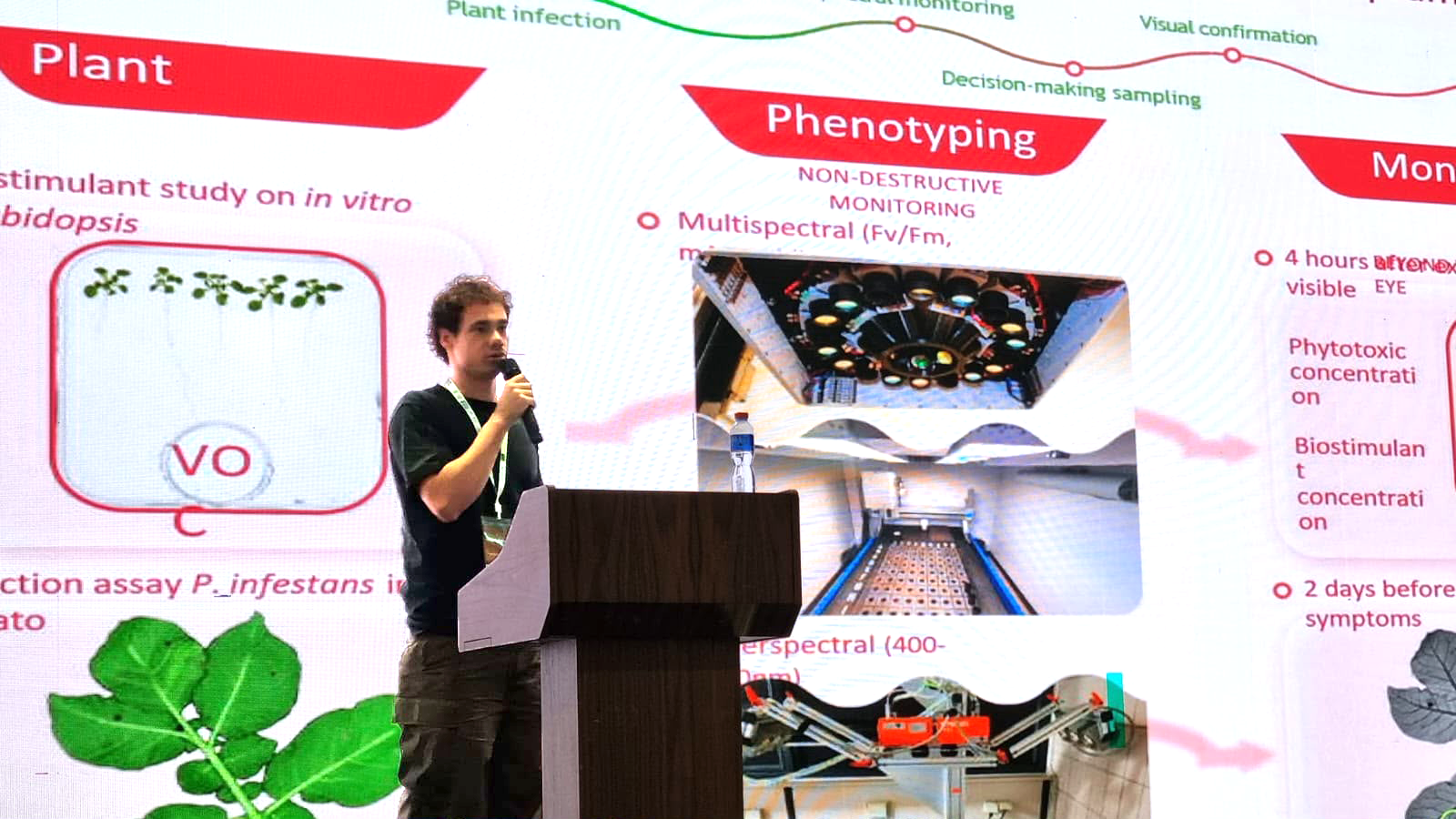
Jelle Van Vooren representing LAMP at IPPN
Our PhD researcher Jelle Van Vooren is currently abroad for the International Plant Phenotyping Network (IPPN), where he is presenting our phenotyping platform and its application to sample efficiently for RNA-seq. Safe travels and good luck, Jelle!

Two new FWO PhD fellowships for LAMP
Congratulations to Simon Vermeulen and Silke Bouckenooghe, who were both granted an FWO PhD fellowship! Simon received an FWO SB Aspirant Strategisch Basisonderzoek (strategic basic research) fellowship for his project on enzyme-coupled nanoparticles for dsRNA delivery against phytopathogenic fungi, supervised by Kris Audenaert and Kristof De Schutter. Silke received an FWO Aspirant Fundamenteel Onderzoek (fundamental research) fellowship for her project on allodiploidy in the red algal genus Porphyra, supervised by Olivier De Clerck and Kris Audenaert.

Lies Van Vlierberghe presenting at Plant Pathology 2026
This week, our team member Lies is attending the Plant Pathology conference in England! She is presenting her poster, "Unlocking the diverse Sarocladium lifestyles through CRISPR-Cas9 and live imaging." Best of luck, Lies!

Visiting scientists from South Africa join LAMP
LAMP welcomes two visiting scientists from South Africa: Lihan Esterhuizen, staying for 6 months, and Lehlogonolo "Nolo" Shalang, staying for 3 months. Their visit is supported by a VLIR-UOS South Initiative grant (administrative promotor: Wouter Maes) on fungal diseases in Eucalyptus. Welcome to the team!
Publications archive
Belgian endive-derived biostimulant activity in Arabidopsis, lettuce, and sweet pepper at different developmental stages, environmental conditions, and application methods
FRONTIERS IN PLANT SCIENCE
Biological control of Botrytis cinerea in tomato and Fusarium graminearum in wheat using the novel species Burkholderia mycopellens and Burkholderia crassaminum
FRONTIERS IN MICROBIOLOGY
CRISPR Cas9 editing and GFP labeling in Sarocladium for functional studies
77th International Symposium on Crop Protection, Abstracts
Evaluation of the tolerance of duckweed (Lemnaceae) to abiotic stress factors associated with nutrient recycling systems via multispectral imaging
PLANT STRESS
Integrated metabolomic and transcriptomic analysis to elucidate the antifungal and antimycotoxin mechanisms of natural stilbenoids against Fusarium graminearum
MICROBIOLOGICAL RESEARCH
Absolute oral bioavailability, quantitative toxicokinetics and metabolite profiling of alternariol and alternariol monomethyl ether in pigs
ARCHIVES OF TOXICOLOGY
Biological control of Phytophthora infestans in Solanum tuberosum by volatile organic compounds
European Plant Phenomics Symposium, Abstracts
Deciphering the emergence of phytopathogenicity in the Sarocladium oryzae species complex through pangenome analyses
14th Conference of the European Foundation for Plant Pathology, Abstracts
Discovering novel bio-active metabolites of the endophyte Serendipita by using immuno-compromised tomato plants
14th Conference of the European Foundation for Plant Pathology, Abstracts
Pangenome analyses of the Sarocladium oryzae species complex
76th International Symposium on Crop Protection, Abstracts
The biocontrol agent Streptomyces rimosus subsp. rimosus tempers shifts in the wheat spicosphere microbiome induced by Fusarium Head Blight
FRONTIERS IN PLANT SCIENCE
Towards effective biocontrol of Phytophthora root rot in annual crops : a meta-analysis
BIOLOGICAL CONTROL
Uncovering mode of action of green leaf volatiles as biocontrol agents against Phytophthora infestans in potato
IS-MPMI, 20th Congress, Abstracts
Uncovering the role of Serendipita williamsii volatiles in establishing its own plant beneficial endophytic colonization : a parallel study of the headspace composition and mode of action
2nd BrIAS Conference on Smart Agriculture, Abstracts
Unraveling Sarocladium pathogenicity in rice: Toxin biosynthesis, host infection, and sheath rot disease progression
14th Conference of the European Foundation for Plant Pathology, Abstracts
Actinobacteria as promising biocontrol agents for in vitro and in planta degradation and detoxification of Zearalenone
TOXINS
Beneficial molecules in the headspace of Serendipita williamsii : chemical analysis to mode of action
Plant BioProTech & IOBC-IR 2024, Abstracts
Celery waste material : a potential source of crop protection compounds
20th International Conference on Renewable Resources & Biorefineries, Abstracts
Detection of Botrytis cinerea on strawberry leaves upon mycelial infection through imaging technique
SCIENTIA HORTICULTURAE
Editorial : advanced approaches identifying novel nutrient-use-enhancing biostimulants
FRONTIERS IN PLANT SCIENCE
Ethylene production during Alternaria infections on potato plants and its antagonistic role in virulence of different Alternaria species
PLANT PATHOLOGY
Exploring synergistic effects of levan and levan-metabolizing Bacillaceae in promoting growth and enhancing immunity of tomato and wheat
PHYSIOLOGIA PLANTARUM
Harnessing rhizobacteria to optimize zinc remediation by hemp
19th International Symposium on Microbial Ecology (ISME 19), Abstracts
Linnemannia elongata : a key species in chitin-based plant growth promotion
PHYTOBIOMES JOURNAL
Overexpression of the ribosome-inactivating protein OsRIP1 modulates the jasmonate signaling pathway in rice
FRONTIERS IN PLANT SCIENCE
ProTECTzymes : synthetic fungal cell wall-degrading enzymes as biofungicides
Plant BioProTech & IOBC-IR 2024, Abstracts
Study of amino acid-derived 3-acyltetramic acids as herbicidal agents
JOURNAL OF AGRICULTURAL AND FOOD CHEMISTRY
Synthesis of 2-acylpyrrolizidine-1,3-dione derivatives and screening of their herbicidal activity
18th Belgian Organic Synthesis Symposium, Abstracts
Synthesis of 3-acylpiperidine-2,4-diones from natural precursors as potential herbicidal agents : differences in reactivity between α- and β-amino acids
18th Belgian Organic Synthesis Symposium, Abstracts
Synthesis of mixed phosphonate esters and amino acid-based phosphonamidates, and their screening as herbicides
INTERNATIONAL JOURNAL OF MOLECULAR SCIENCES
6-deoxy-6-amino chitosan : a preventative treatment in the tomato/Botrytis cinerea pathosystem
FRONTIERS IN PLANT SCIENCE
Actinobacteria as a biocontrol tool against Fusarium graminearum : mitigation of zearalenone in vitro and in planta on wheat ears
European Fusarium Seminar, 16th, Abstracts
Aspergillus flavus and Fusarium verticillioides and their main mycotoxins : global distribution and scenarios of interactions in maize
TOXINS
Comparative toxicokinetics of Alternaria mycotoxins in pigs as a surrogate animal model for humans
15th International Congress of the European Association for Veterinary Pharmacology and Toxicology, Abstracts
Deciphering Alternaria metabolic responses in microbial confrontation via an integrated mass spectrometric targeted and non-targeted strategy
FOOD CHEMISTRY
Effect of exo-metabolites produced by Streptomyces on the mycelial growth and spore production of Fusarium graminearum
74th International Symposium on Crop Protection, Abstracts
Fusarium species and strains involved in Fusarium Head Blight are differentially affected by the promising TickCore3-based plant care solution
RESEARCH SQUARE
Identifying the optimal radiometric calibration method for UAV-based multispectral imaging
REMOTE SENSING
Molecular analysis of broad-spectrum induced resistance in rice by the green leaf volatile Z-3-hexenyl acetate
JOURNAL OF EXPERIMENTAL BOTANY
Shaping the maize rhizosphere : towards an ecologically relevant selection method for microbial biostimulants
Stilbenoids as promising natural product-based solutions in a race against mycotoxigenic fungi : a comprehensive review
JOURNAL OF AGRICULTURAL AND FOOD CHEMISTRY
Straightforward synthesis of P-alkylphosphonamidates and bioactivity screening as herbicides or quorum sensing modulators
ACS Fall 2023, Abstracts
Uncovering genomic features and biosynthetic gene clusters in endophytic bacteria from roots of the medicinal plant Alkanna tinctoria Tausch as a strategy to identify novel biocontrol bacteria
MICROBIOLOGY SPECTRUM
β-Aminobutyric acid induced phytotoxicity and effectiveness against nematode is stereomer-specific and dose-dependent in tomato
PHYSIOLOGIA PLANTARUM
A novel in planta enrichment method employing Fusarium graminearum-infected wheat spikes to select for competitive biocontrol bacteria
TOXINS
Characterization of Ugandan endemic Aspergillus species and identification of non-aflatoxigenic isolates for potential biocontrol of aflatoxins
TOXINS
Crosstalk between Fusarium verticillioides and Aspergillus flavus on maize
27th International ICFMH Conference (FoodMicro 2022), Abstract book
Cytotoxic effects of alternariol, alternariol monomethyl-ether, and tenuazonic acid and their relevant combined mixtures on human enterocytes and hepatocytes
FRONTIERS IN MICROBIOLOGY
Exploring the genetic and phenotypic diversity within and between onion (Allium cepa L.) ecotypes in Morocco
JOURNAL OF GENETIC ENGINEERING AND BIOTECHNOLOGY
Implementing actinobacteria as a biocontrol tool to reduce Fusarium Head Blight in wheat
3rd ASM joint MYTOX-SOUTH Symposium 2022, Abstracts
Influence of nixtamalization cooking ingredients on the minerals composition of nixtamalized maize and sorghum
JOURNAL OF CEREAL SCIENCE
Innovative rhizosphere-based enrichment under P-limitation selects for bacterial isolates with high-performance P-solubilizing traits
MICROBIOLOGY SPECTRUM
Phenology-regulated defence mechanisms as drivers for Fusarium basal rot in onion (Allium cepa)
PLANT PATHOLOGY
Uncovering new insights and misconceptions on the effectiveness of phosphate solubilizing rhizobacteria in plants : a meta-analysis
FRONTIERS IN PLANT SCIENCE
A bacterial mixed culture is capable of degrading the mycotoxin deoxynivalenol into a metabolite, which still has a high toxic effect towards eukaryotic cells
European Fusarium seminar, 15th, Abstracts
Bacterial enrichment cultures biotransform the mycotoxin deoxynivalenol into a novel metabolite toxic to plant and porcine cells
TOXINS
Contamination of Fusarium proliferatum and Aspergillus flavus in the rice chain linked to crop seasons, cultivation regions, and traditional agricultural practices in Mekong Delta, Vietnam
FOODS
Cross-talk between Fusarium verticillioides and Aspergillus flavus in vitro and in planta
MYCOTOXIN RESEARCH
Development of an in vitro gastro-intestinal pig model to screen potential detoxifying agents for the mycotoxin deoxynivalenol
FOOD ADDITIVES AND CONTAMINANTS PART A-CHEMISTRY ANALYSIS CONTROL EXPOSURE & RISK ASSESSMENT
Effect of selected cooking ingredients for nixtamalization on the reduction of Fusarium mycotoxins in maize and Sorghum
TOXINS
From field to isolate, a novel method for selecting ear colonizing bacteria to control Fusarium graminearum in wheat, comparing in vitro and in planta efficacy
MycoTWIN-MycoKey 2021, Book of Abstracts
Fusarium basal rot : profile of an increasingly important disease in Allium spp.
TROPICAL PLANT PATHOLOGY
Genetic characterization of fungal biodiversity in storage grains : towards enhancing food safety in northern Uganda
MICROORGANISMS
Green leaf volatile confers management of late blight disease : a green vaccination in potato
JOURNAL OF FUNGI
Identification of novel rotihibin analogues in Streptomyces scabies, including discovery of its biosynthetic gene cluster
MICROBIOLOGY SPECTRUM
Identification of strategies to mitigate fumonisins in maize from Vietnamese smallholder farms
Impact of ethnic pre-harvest practices on the occurrence of Fusarium verticillioides and fumonisin B1 in maize fields from Vietnam
FOOD CONTROL
Impact of season, region, and traditional agricultural practices on aflatoxins and fumonisins contamination in the rice chain in the Mekong Delta, Vietnam
TOXINS
Induced resistance by ascorbate oxidation involves potentiating of the phenylpropanoid pathway and improved rice tolerance to parasitic nematodes
FRONTIERS IN PLANT SCIENCE
Molecular insights into defense responses of Vietnamese maize varieties to Fusarium verticillioides isolates
JOURNAL OF FUNGI
Multi-mycotoxin contamination of maize silages in Flanders, Belgium : monitoring mycotoxin levels from seed to feed
TOXINS
Mycotoxin profile of staple grains in northern Uganda : understanding the level of human exposure and potential risks
FOOD CONTROL
Overexpression of F-Box Nictaba promotes defense and anthocyanin accumulation in Arabidopsis thaliana after pseudomonas syringae infection
FRONTIERS IN PLANT SCIENCE
Population, virulence, and mycotoxin profile of Fusarium spp. associated with basal rot of Allium spp. in Vietnam
PLANT DISEASE
Post-harvest contamination of maize by Fusarium verticillioides and fumonisins linked to traditional harvest and post-harvest practices : a case study of small-holder farms in Vietnam
INTERNATIONAL JOURNAL OF FOOD MICROBIOLOGY
Presence of the weakly pathogenic Fusarium poae in the Fusarium head blight disease complex hampers biocontrol and chemical control of the virulent Fusarium graminearum pathogen
FRONTIERS IN PLANT SCIENCE
Shaping the rhizosphere : can in planta rhizobiome selection for phosphate solubilizing bacteria outperform classical in vitro selection methods?
Biostimulants World Congress, 5th, Abstracts
Shifts in the rhizobiome during consecutive in planta enrichment for phosphate-solubilizing bacteria differentially affect maize P status
MICROBIAL BIOTECHNOLOGY
Streptomyces strains promote plant growth and induce resistance against Fusarium verticillioides via transient regulation of auxin signaling and archetypal defense pathways in maize plants
FRONTIERS IN PLANT SCIENCE
Survival of the fittest : how the rice microbial community forces Sarocladium oryzae into pathogenicity
FEMS MICROBIOLOGY ECOLOGY
The phenylpropanoid pathway inhibitor piperonylic acid induces broad-spectrum pest and disease resistance in plants
PLANT CELL AND ENVIRONMENT
At the scene of the crime : new insights into the role of weakly pathogenic members of the fusarium head blight disease complex
MOLECULAR PLANT PATHOLOGY
Automated multispectral imaging as a tool for the in planta selection of rhizosphere competent bacterial biostimulants
Phenome 2020, Abstracts
Auxin, abscisic acid and jasmonate are the central players in rice sheath rot caused by Sarocladium oryzae and Pseudomonas fuscovaginae
RICE
Biocidal activity of plant-derived compounds against Phytophthora infestans : an alternative approach to late blight management
CROP PROTECTION
Differences in pre-harvest practices linked to the occurence of Fusarium species and fumonisins in maize in Vietnam
WMFmeetsAsia, Abstracts
Evaluation of genome size and quantitative features of the dolipore septum as taxonomic predictors for the Serendipita ‘williamsii’ species complex
FUNGAL BIOLOGY
Fungal endophyte exo-metabolites alter the morphology and metabolome of the plant pathogen Fusarium graminearum: an LC-MS based metabolomics approach to unravel the biocontrol effect
European RFMF-Metabomeeting, Abstracts
Metabolomics reveal induction of ROS production and glycosylation events in wheat upon exposure to the green leaf volatile Z-3-hexenyl acetate
FRONTIERS IN PLANT SCIENCE
Morphological, Pathogenic and Toxigenic Variability in the Rice Sheath Rot Pathogen Sarocladium Oryzae
TOXINS
Phenotypic variation of Botrytis cinerea isolates is influenced by spectral light quality
FRONTIERS IN PLANT SCIENCE
Respiratory CO2 combined with a blend of volatiles emitted by endophytic Serendipita strains strongly stimulate growth of Arabidopsis implicating auxin and cytokinin signaling
FRONTIERS IN PLANT SCIENCE
Revisiting an Aspergillus flavus strain isolated from an Egyptian sugarcane field in 1930
MICROORGANISMS
Risk characterization and quantification of mycotoxins and their producing fungi in sugarcane juice : a neglected problem in a widely-consumed traditional beverage
FOOD CONTROL
Uncovering the biofumigant capacity of allyl isothiocyanate from several Brassicaceae crops against Fusarium pathogens in maize
JOURNAL OF THE SCIENCE OF FOOD AND AGRICULTURE
Biodiversity of mycotoxigenic fungi and their secondary metabolites in sugarcane juice
ICFM conference, Abstracts
Biological control of mycotoxigenic fungi and their toxins : an update for the pre-harvest approach
Mycotoxins : socio-economic and health impact as well as pre- and postharvest management strategies [working title]
Differences in local pre-harvest practices linked with the occurrence of Fusarium species in maize grown by two farmer groups in Vietnam’s central highlands
ICFM conference, Abstracts
Early sowing and harvesting as effective measures to reduce stalk borer injury, Fusarium verticillioides incidence and associated fumonisin production in maize
TROPICAL PLANT PATHOLOGY
Exploration of essential oils as alternatives to conventional fungicides in lupin cultivation
ORGANIC AGRICULTURE
Flow cytometry, a powerful novel tool to rapidly assess bacterial viability in metal working fluids : proof-of-principle
PLOS ONE
Impact of fungicides and weather on cyclodepsipeptide-producing Fusarium spp. and beauvericin and enniatin levels in wheat grains
JOURNAL OF THE SCIENCE OF FOOD AND AGRICULTURE
In planta selection of rhizosphere competent biostimulant microorganisms through an automated plant phenomics platform
Biostimulants World Congress, 4th, Abstracts
Investigation of the metabolic profile and toxigenic variability of fungal species occurring in fermented foods and beverage from Nigeria and South Africa using UPLC-MS/MS
TOXINS
LC-MS based metabolomics study to unravel the biocontrol effect of fungal endophytes against the plant pathogen Fusarium graminearum
Scottish Metabolomics Network, Symposium abstracts
MYCOSUGAR : investigation on mycotoxins and their producing fungi in sugarcane and its by-products
Metrology in Food and Nutrition, 4th International conference, Abstracts
Mycotoxins in Flanders’ Fields : occurrence and correlations with fusarium species in whole-plant harvested maize
MICROORGANISMS
Remediation of deoxynivalenol (DON) : developing an in vitro model to screen potential detoxifying agents on DON degradation and detoxification in a simulated gastro-intestinal tract of a pig
WMF meets IUPAC 2019, Abstracts
Sebacinoids within rhizospheric fungal communities associated with subsistence farming in the Congo Basin : a needle in each haystack
FEMS MICROBIOLOGY ECOLOGY
The potential of Brassicaceae biofumigant crops to manage Pleiochaeta setosa in sustainable lupin cultivation
BIOLOGICAL CONTROL
The quest for bacteria capable of detoxifying deoxynivalenol, a worldwide prevalent mycotoxin in cereal crops
Emerging applications of microbes, VIB conference, Abstracts
The use of high resolution mass spectrometric dereplication as a chemical approach for fungal identification and classification
Eurachem, Abstracts
Actinobacteria vs. Fusarium : battle of the toxins
Microbial Ecology, 17th International symposium, Abstracts
An HPLC-FLD method to measure ochratoxin A in teff (Eragrostis tef) and wheat (Triticum spp.) destined for the local Ethiopian market
WORLD MYCOTOXIN JOURNAL
Analysis of population structure and genetic diversity reveals gene flow and geographic patterns in cultivated rice (O. sativa and O. glaberrima) in West Africa
EUPHYTICA
Bacillus velezensis as antagonist towards Penicillium roqueforti s.l. in silage : in vitro and in vivo evaluation
JOURNAL OF APPLIED MICROBIOLOGY
Biogenic volatile compounds (BVOCs) produced by fungal endophytes reduce zearalenone (ZEN) and trichothecenes produced by Fusarium graminearum
MycoKey, 2nd International conference, Abstracts
Biological control of mycotoxigenic fungi in cereals : a successful step to food safety
Tropentag 2018 : Global food security and food safety : the role of universities, Abstracts
Clinical impact of deoxynivalenol, 3-acetyl-deoxynivalenol and 15-acetyl-deoxynivalenol on the severity of an experimental Mycoplasma hyopneumoniae infection in pigs
BMC VETERINARY RESEARCH
Combining high yields and blast resistance in rice (Oryza spp.) : a screening under upland and lowland conditions in Benin
SUSTAINABILITY
Control of Fusarium verticillioides (Sacc.) Nirenberg and fumonisins by using a combination of crop protection products and fertilization
TOXINS
Crossing borders to mitigate mycotoxins : where microbiology, poly-omics and crop protection meet
Applied Biological Sciences, 23rd National symposium, Abstracts
Dietary exposure to mycotoxins through the consumption of sugar cane juice in Egypt : the forgotten beverage
Mycotoxicology, 2nd African symposium, Abstracts
Diversity in mycotoxin biodegradation vs. detoxification within Actinobacteria : create no greater evil
17th International symposium on Microbial Ecology (ISME-17)
Exploring fungal endophytes as new biocontrol agents against Fusarium graminearum in maize
European Fusarium seminar, 14th, Abstracts
Exploring genetic diversity and disease response of cultivated rice accessions (Oryza spp.) against Pyricularia oryzae under rainfed upland conditions in Benin
GENETIC RESOURCES AND CROP EVOLUTION
Fungal endophytes control Fusarium graminearum and reduce trichothecenes and zearalenone in maize
TOXINS
Highlight report: Mycotoxins as food contaminants in Africa : challenges and perspectives
ARCHIVES OF TOXICOLOGY
Interaction between lactic acid bacteria and two species of the Penicillium roqueforti group : an in vitro and in vivo approach
Silage, XVIIIth International conference, Abstracts
Microbial degradation of zearalenone by Actinobacteria : mind the toxicity
European Fusarium seminar, 14th, Abstracts
Microbial detoxification of the mycotoxin deoxynivalenol
Applied Biological Sciences, 23rd National symposium, Papers
MycoKey round table discussions of future directions in research on chemical detection methods, genetics and biodiversity of mycotoxins
TOXINS
Novel biocontrol agents “Fungal Endophyte” for Fusarium graminearum biocontrol in maize
32nd meeting of the KNPV Fusarium working group, Abstracts
Processing of mycotoxin contaminated waste streams through anaerobic digestion
WASTE MANAGEMENT
Remediation in an agroecosystem : microbial detoxification of deoxynivalenol
European Fusarium seminar, 14th, Abstracts
Species prevalence and disease progression studies demonstrate a seasonal shift in the Alternaria population composition on potato
PLANT PATHOLOGY
The quest for bacteria capable of detoxifying deoxynivalenol, a worldwide prevalent mycotoxin in cereal crops
Microbial Ecology, 17th International symposium, Abstracts
Assessing the Belgian potato Alternaria population for sensitivity to fungicides with diverse modes of action
EUROPEAN JOURNAL OF PLANT PATHOLOGY
Bacillus subtilis as a biocontrol organism towards Penicillium roqueforti s.l. in silage : in vitro and in vivo evaluation
MycoKey, 1st International conference, Abstracts
Boscalid-resistance in Alternaria alternata and Alternaria solani populations : an emerging problem in Europe
CROP PROTECTION
Congolese rhizospheric soils as a rich source of new plant growth-promoting endophytic Piriformospora isolates
FRONTIERS IN MICROBIOLOGY
Elucidation of the mode of action of new biological control agents against fusarium mycotoxins production using Q-TOF LC/MS
3rd International Mass Spectrometry School, Abstracts
Flow cytometry is a powerful tool for assessment of the viability of fungal conidia in metalworking fluids
APPLIED AND ENVIRONMENTAL MICROBIOLOGY
Genetic divergence and chemotype diversity in the fusarium head blight pathogen Fusarium poae
TOXINS
Identification of A. arborescens, A. grandis, and A. protenta as new members of the European Alternaria population on potato
FUNGAL BIOLOGY
Microbial detoxification of deoxynivalenol (DON), assessed via a Lemna minor L. bioassay, through biotransformation to 3-epi-DON and 3-epi-DOM-1
MycoKey, 1st International conference, Abstracts
Microbial detoxification of deoxynivalenol (DON), assessed via a Lemna minor L. bioassay, through biotransformation to 3-epi-DON and 3-epi-DOM-1
TOXINS
Novel biocontrol agents against Fusarium graminearum and its mycotoxins in maize
MycoKey, 1st International conference, Abstracts
Potentials and limitations of existing forecasting models for Alternaria on potatoes : challenges for model improvement
POTATO RESEARCH
The plant response induced in wheat ears by a combined attack of Sitobion avenae aphids and Fusarium graminearum boosts fungal infection and deoxynivalenol production
MOLECULAR PLANT PATHOLOGY
Unraveling the zearalenone degradation pathway using a poly-omics approach : first results
MycoKey, 1st International conference, Abstracts
A European database of Fusarium graminearum and F-culmorum trichothecene genotypes
FRONTIERS IN MICROBIOLOGY
Aphids transform and detoxify the mycotoxin deoxynivalenol via a type II biotransformation mechanism yet unknown in animals
SCIENTIFIC REPORTS
Biodegradability of mycotoxins during anaerobic digestion
Mycotoxins and Toxigenic Moulds, 5th International symposium, Abstracts
Biodegradability of mycotoxins during anaerobic digestion
European Biogas Association, 3rd Conference, Abstracts
Biodegradation of mycotoxins : tales from known and unexplored worlds
FRONTIERS IN MICROBIOLOGY
Effect of the mycotoxin deoxynivalenol on grain aphid Sitobion avenae and its parasitic wasp Aphidius ervi through food chain contamination
ARTHROPOD-PLANT INTERACTIONS
Impact of local pre-harvest management practices in maize on the occurrence of Fusarium species and associated mycotoxins in two agro-ecosystems in Tanzania
FOOD CONTROL
Living apart together : crosstalk between the core and supernumerary genomes in a fungal plant pathogen
BMC GENOMICS
Microbial degradation of deoxynivalenol
Mycotoxins and Toxigenic Moulds, 5th International symposium, Abstracts
Microbial degradation of the mycotoxin deoxynivalenol
Applied Biological Sciences, 21st National symposium, Abstracts
Mining the genome of Rhodococcus fascians, a plant growth-promoting bacterium gone astray
NEW BIOTECHNOLOGY
Occurrence of toxigenic fungi and ochratoxin A in Ethiopian coffee for local consumption
FOOD CONTROL
Occurrence, prevention and remediation of toxigenic fungi and mycotoxins in silage: a review
JOURNAL OF THE SCIENCE OF FOOD AND AGRICULTURE
Report from the 5th international symposium on mycotoxins and toxigenic moulds : challenges and perspectives (MYTOX) held in Ghent, Belgium, May 2016
TOXINS
The impact of deoxynivalenol on pigeon health : occurrence in feed, toxicokinetics and interaction with salmonellosis
PLOS ONE
Verwerking van mycotoxine gecontamineerd organisch-biologisch afval door vergisting: biodegradeerbaarheid en effect op methaanopbrengst
Microbial degradation of DON
Working group on Fusarium of the Royal Netherlands Society for Plant Protection, Symposium abstracts
Priming of wheat with the green leaf volatile Z-3-hexenyl acetate enhances defense against Fusarium graminearum but boosts deoxynivalenol production
PLANT PHYSIOLOGY
Strigolactones as an auxiliary hormonal defence mechanism against leafy gall syndrome in Arabidopsis thaliana
JOURNAL OF EXPERIMENTAL BOTANY
Antifungal and antimycotoxigenic metabolites in Anacardiaceae species from northwest Argentina: isolation, identification and potential for control of Fusarium species
JOURNAL OF APPLIED MICROBIOLOGY
Biotic stresses in the anthropogenic hybrid triticale (xTriticosecale Wittmack): current knowledge and breeding challenges
EUROPEAN JOURNAL OF PLANT PATHOLOGY
Deoxynivalenol : a major player in the multifaceted response of Fusarium to its environment
TOXINS
Deoxynivalenol content in wheat dust versus wheat grain: a comparative study
WORLD MYCOTOXIN JOURNAL
Detached leaf in vitro model for masked mycotoxin biosynthesis and subsequent analysis of unknown conjugates
WORLD MYCOTOXIN JOURNAL
Formae speciales of cereal powdery mildew: close or distant relatives?
MOLECULAR PLANT PATHOLOGY
Occurrence and within field variability of Fusarium mycotoxins and their masked forms in maize crops in Belgium
WORLD MYCOTOXIN JOURNAL
Present status of bacterial blight in cotton genotypes evaluated at Busia and Siaya counties of Western Kenya
EUROPEAN JOURNAL OF PLANT PATHOLOGY
The compositional mosaic of Fusarium species and their mycotoxins in unprocessed cereals, food and feed products in Belgium
INTERNATIONAL JOURNAL OF FOOD MICROBIOLOGY
The importance of non-penetrated papillae formation in the resistance response of triticale to powdery mildew (Blumeria graminis)
PLANT PATHOLOGY
A field-specific web tool for the prediction of Fusarium head blight and deoxynivalenol content in Belgium
COMPUTERS AND ELECTRONICS IN AGRICULTURE
Abscisic acid promotes susceptibility to the rice leaf blight pathogen Xanthomonas oryzae pv oryzae by suppressing salicylic acid-mediated defenses
PLOS ONE
Evaluation of resistance to powdery mildew in triticale seedlings and adult plants
PLANT DISEASE
Human exposure to mycotoxins and their masked forms through cereal-based foods in Belgium
TOXICOLOGY LETTERS
Influence of maize-wheat rotation systems on Fusarium head blight infection and deoxynivalenol content in wheat under low versus high disease pressure
CROP PROTECTION
Mycotoxin glucosylation in commercial wheat varieties: impact on resistance to Fusarium graminearum under laboratory and field conditions
FOOD CONTROL
Plant disease prediction using data mining and machine learning: a case study on Fusarium head blight and deoxynivalenol content in winter wheat
European Fusarium Seminar, 12th, Abstracts
A field-specific webtool for the prediction of Fusarium head blight and DON content in Belgium
COMMUNICATIONS IN AGRICULTURAL AND APPLIED BIOLOGICAL SCIENCES
A machine learning approach to predict Fusarium head blight
Proceedings of the 21st Belgian-Dutch conference on machine learning
An empirical analysis of explanatory variables affecting Fusarium head blight infection and deoxynivalenol content in wheat
JOURNAL OF PLANT PATHOLOGY
Development and validation of an LC-MS/MS method for the simultaneous determination of deoxynivalenol, zearalenone, T-2 toxin and some masked metabolites in different cereals and cereal-derived food
FOOD ADDITIVES AND CONTAMINANTS PART A-CHEMISTRY ANALYSIS CONTROL EXPOSURE & RISK ASSESSMENT
Fusarium poae: chemotypes, plant-pathogen interactions and reaction to stress triggers
COMMUNICATIONS IN AGRICULTURAL AND APPLIED BIOLOGICAL SCIENCES
Influence of mycotoxins and a mycotoxin adsorbing agent on the oral bioavailability of commonly used antibiotics in pigs
TOXINS
Natural occurrence of mycotoxins and their masked forms in food and feed products
WORLD MYCOTOXIN JOURNAL
Neutralized electrolyzed water efficiently reduces Fusarium spp. in vitro and on wheat kernels but can trigger deoxynivalenol (DON) biosynthesis
FOOD CONTROL
Phylogeography and virulence structure of the powdery mildew population on its 'new' host triticale
COMMUNICATIONS IN AGRICULTURAL AND APPLIED BIOLOGICAL SCIENCES
Phylogeography and virulence structure of the powdery mildew population on its 'new' host triticale
BMC EVOLUTIONARY BIOLOGY
Preference of cereal aphids for different varieties of winter wheat
ARTHROPOD-PLANT INTERACTIONS
Toward a reliable evaluation of forecasting systems for plant diseases : a case study using fusarium head blight of wheat
PLANT DISEASE
An analysis of explanatory variables affecting Fusarium infection and DON content in wheat
COMMUNICATIONS IN AGRICULTURAL AND APPLIED BIOLOGICAL SCIENCES
Analysis and (natural) occurrence of masked Fusarium mycotoxins
Fusarium workshop, Abstracts
Challenges in masked mycotoxin analysis
AOAC Annual meeting and exposition, 125th, Abstracts
Connection between primary Fusarium inoculum on gramineous weeds, crop residues and soil samples and the final population on wheat ears in Flanders, Belgium
CROP PROTECTION
Development and validation of an LC-MS/MS-method for the simultaneous determination of deoxynivalenol, zearalenone, T2-toxin and their masked forms in different cereals and cereal based food
Mycotoxins, 4th International symposium, Abstracts
Development and validation of an LC-MS/MS-method for the simultaneous determination of deoxynivalenol, zearalenone, T2-toxin and their masked forms in different cereals and cereal based food.
Mass Spectrometry in Food and Feed, Abstracts
Facts and figures: masked Fusarium mycotoxins in cereals and cereal-derived products
Mycotoxin Workshop, 33rd, Abstracts
Hydrogen peroxide induced by the fungicide prothioconazole triggers deoxynivalenol (DON) production by Fusarium graminearum
PLANT BREEDING AND SEED SCIENCE
Identification and characterization of yeasts causing chalk mould defects on par-baked bread
FOOD MICROBIOLOGY
Impact of fungicide timing on the composition of the Fusarium head blight disease complex and the presence of deoxynivalenol (DON) in wheat
Fungicides : beneficial and harmful aspects
Integrated approach on weed control in sweet narrow-leafed lupin (Lupinus angustifolius)
COMMUNICATIONS IN AGRICULTURAL AND APPLIED BIOLOGICAL SCIENCES
Masked Fusarium mycotoxins: results of a one-year survey in Flanders
Mycotoxins, 4th International symposium, Abstracts
Neutralized electrolyzed water efficiently reduces Fusarium spp. but can trigger DON biosynthesis
Mycotoxins in Nuts and Dried Fruits, 1st International symposium, Abstracts
Post-emergence weed control in narrow-leafed lupins (Lupinus angustifolius)
COMMUNICATIONS IN AGRICULTURAL AND APPLIED BIOLOGICAL SCIENCES
A machine learning approach to predict Fusarium head blight in winter wheat
Fusarium, 11th European seminar, Abstracts
An empirical analysis of explanatory variables affecting Fusarium and deoxynivalenol in wheat for feed production
2nd Workshop feed-to-food FP7 REGPOT-3. XIV International symposium feed technology : proceedings
An update: investigation of new analytical challenges for mycotoxin determination: masked mycotoxins
Hormone and Veterinary Drug Residue Analysis, 6th International symposium, Abstracts
Composition of primary Fusarium head blight (FHB) inoculums and the final population on wheat ears
COMMUNICATIONS IN AGRICULTURAL AND APPLIED BIOLOGICAL SCIENCES
Composition of primary Fusarium inoculum and the final population on wheat ears
Crop Protection, 62nd International symposium, Abstracts
Diversity of lactic acid bacteria from modified atmosphere packaged sliced cooked meat products at sell-by date assessed by PCR-denaturing gradient gel electrophoresis
FOOD MICROBIOLOGY
Hydrogen peroxide induced by the fungicide prothioconazole triggers deoxynivalenol (DON) production by Fusarium graminearum
BMC MICROBIOLOGY
Hydrogen peroxide induced by the fungicide prothioconazole triggers deoxynivalenol (DON) production by Fusarium graminearum
Fusarium, 11th European seminar, Abstracts
Identification and characterization of chalk moulds in bread
International Mycological Congress, 9th, Abstracts
Investigation of new analytical challenges for mycotoxin determination: masked mycotoxins
Vlaams Jongerencongres van de Chemie, 10e, Samenvattingen
Masked mycotoxins: an emerging issue for food safety
Exchange : open innovation for feed, food and health, where industry and academia meet
Monitoring wheat fields in Belgium to assess the role of aphids in the spread of Fusarium
Fusarium, 11th European seminar, Abstracts
Relationship between primary Fusarium inoculum and the final population on wheat ears
European Fusarium seminar, 11th, Abstracts
The Fusarium poae population on wheat (Triticum aestivum) in Belgium from 2002-2010: interseason variations, chemotypes and resistance to stress factors
Fusarium, 11th European seminar, Abstracts
Virulence and genetic diversity of the powdery mildew (Blumeria graminis (DC.) Speer) population on triticale
COMMUNICATIONS IN AGRICULTURAL AND APPLIED BIOLOGICAL SCIENCES
Detection of GM ingredients in fish feed
Handbook of seafood and seafood products analysis
Fusarium head blight (FHB) in Flanders : population diversity, inter-species associations and DON contamination in commercial winter wheat varieties
EUROPEAN JOURNAL OF PLANT PATHOLOGY
Machine learning algorithms for disease prediction in winter wheat
The 18th Annual Belgian-Dutch conference on Machine Learning : proceedings of the conference
Onderzoek rond nieuwe analytische uitdagingen voor de bepaling van mycotoxinen: gemaskeerde mycotoxinen
Dag van het Onderzoek, Samenvattingen
Powdery mildew on triticale: genetic characterisation of the Blumeria graminis population
Triticale, 7th International symposium, Abstracts
Study of Fusarium sp. in triticale in Belgium (Flanders) during 2002-2008
Triticale, 7th International symposium, Abstracts
Virulence and diversity of the powdery mildew (Blumeria graminis) population on triticale in Belgium
Cereal Rusts and Powdery Mildews, 12th International conference, Abstracts
Fusarium spp. and Microdochium nivale populations on winter wheat in Flanders, in relation to presence of mycotoxins
JOURNAL OF PLANT PATHOLOGY
Survey of the Fusarium spp. and Microdochium nivale population on winter wheat in Flanders
JOURNAL OF PLANT PATHOLOGY
Toepassingsmogelijkheden van de denaturerende gradiënt gel electroforese (DGGE) techniek met het oog op een efficiënte monitoring van de bacteriële houdbaarheid en veiligheid van levensmiddelen
Levensmiddelenmicrobiology in de 21e eeuw : heden en toekomst, Samenvattingen
Identification and source tracking of spoilage organisms associated with modified atmosphere packaged cooked meat products
Food Microbiology, 12th Conference, Abstracts
Resistance to Botrytis cinerea in sitiens, an abscisic acid-deficient tomato mutant, involves timely production of hydrogen peroxide and cell wall modifications in the epidermis
PLANT PHYSIOLOGY
Potential of PCR-denaturing gel electrophoresis to explore the diversity of lactic acid bacteria associated with modified atmosphere packaged sliced cooked meat products
Food Microbiology, 11th Conference, Abstracts
Suppression of bacterial blight on rice by induced systemic resistance and manipulation of endogenous abscisic acid levels
Biological Control of Bacterial Diseases, 1st International symposium, Abstracts
The salicylic acid-dependent defence pathway is effective against different pathogens in tomato and tobacco
PLANT PATHOLOGY
Effect of abscisic acid biosynthesis inhibitor fluorochloridone on the virulence of Botrytis cinerea and Oidium neolycopersici
COMMUNICATIONS IN AGRICULTURAL AND APPLIED BIOLOGICAL SCIENCES
Induced resistance by Pseudomonas aeruginosa 7NSK2: bacterial determinants and reactions in the plant
IOBC/WPRS BULLETIN
Role of abscisic acid in the interaction of tomato with necrotrophic pathogens
Plant Pathology, 8th International congress, Abstracts
Role of abscisic acid in the interaction of tomato with necrotrophic pathogens
Centrum voor Landbouwkundig Onderzoek, Verslag infodag
Role of abscisic acid in the susceptibility of tomato to necrotrophic pathogens
Molecular Phytopathology, 2nd International workshop, Abstract
Abscisic acid determines basal susceptibility of tomato to Botrytis cinerea and suppresses salicylic acid-dependent signaling mechanisms
PLANT PHYSIOLOGY
Bacterial determinants involved in induced systemic resistance
Plant-Microbe Interactions, FWO symposium, Abstracts
Induction of systemic resistance to Botrytis cinerea in tomato by Pseudomonas aeruginosa 7NSK2 : role of salicylic acid, pyochelin, and pyocyanin
MOLECULAR PLANT-MICROBE INTERACTIONS
The SA-dependent defense pathway is active against different pathogens in tomato and tobacco.
MEDEDELINGEN VAN DE FACULTEIT LANDBOUWKUNDIGE EN TOEGEPASTE BIOLOGISCHE WETENSCHAPPEN, UNIVERSITEIT GENT
The role of salicylate and abscisic acid in defense response of tomato and tobacco to Oidium lycopersici.
Annales 2° Conférence Internationale sur les moyens alternatifs de lutte contre les organismes nuisibles aux végétaux-Lille
Induced resistance to Botrytis cinerea by Pseudomonas aeruginosa: role of siderophores and pyocyanin
Crop Protection, 53rd International symposium, Abstracts
Induced resistance to Botrytis cinerea by Pseudomonas aeruginosa: role of siderophores and pyocyanin
IOBC/WPRS BULLETIN
Induced resistance to Botrytis cinerea by Pseudomonas aeruginosa: role of siderophores and pyocyanin
Molecular Plant-Microbe Interactions, 10th International congress, Abstracts
Mechanisms of Pseudomonas aeruginosa induced pathogen resistance in plants
Pseudomonas 2011 : abstract book
Role of abscisic acid and salicylic acid in the interaction of tomato with biotrophic and necrotrophic
Pathogenesis-Related Proteins, 6th International workshop, Abstracts
Role of abscisic acid in the resistance of tomato to necrotrophic and biotrophic pathogens
Plant Growth Substances, 17th International conference, Abstracts
Role of salicylic acid and active oxygen species in induced systemic resistance
Pathogenesis-Related Proteins, 6th International workshop, Abstracts
Abscisic acid determines basal susceptibility of tomato to Botrytis cinerea through suppression of salicylic acid -dependent defense mechanisms
Botrytis, XII International symposium, Abstracts
Abscisic acid modulates SA-dependent defense of tomato to necrotrophic pathogens
Crop Protection, 52nd International symposium, Abstracts
Abscisic acid modulates SA-dependent defense of tomato to necrotrophic pathogens
Induced Resistance to Plant Diseases, 1st International symposium, Abstracts
Induced systemic resistance in tomato, tobacco and bean by Pseudomonas aeruginosa 7NSK2: bacterial determinants, signal transduction pathways and role of host resistance
Proceedings of fifth international workshop on plant growth-promoting rhizobacteria, Córdoba, Argentina
Induced systemic resistance in tomato, tobacco and bean by fluorescent pseudomonads: bacterials determinants, signal transduction pathways and role of host resistance
Auburn University digital papers
Mechanisms involved in induced resistance in tomato to Botrytis cinerea by Pseudomonas aeruginosa 7NSK2 and its mutants
MEDEDELINGEN VAN DE FACULTEIT LANDBOUWKUNDIGE EN TOEGEPASTE BIOLOGISCHE WETENSCHAPPEN, UNIVERSITEIT GENT
Potential of induced resistance to control tomato leaf pathogens
Proceedings 5th congress of the European Foundation of Plant Pathology : biodiversity in plant pathology
Involvement of abscisic acid in the response of tomato to Botrytis cinerea.
MEDEDELINGEN VAN DE FACULTEIT LANDBOUWKUNDIGE EN TOEGEPASTE BIOLOGISCHE WETENSCHAPPEN, UNIVERSITEIT GENT
Mechanisms involved in basal resisitance and induced resistance to Botrytis cinerea in tomato
Molecular Plant-Microbe Interactions, 9th International congress, Abstracts
Nanogram amounts of salicylic acid produced by the rhizobacterium Pseudomonas aeruginosa 7NSK2 activate the systemic acquired resistance pathway in bean
MOLECULAR PLANT-MICROBE INTERACTIONS
Pathways involved in control of Botrytis cinerea via induced resistance
MEDEDELINGEN VAN DE FACULTEIT LANDBOUWKUNDIGE EN TOEGEPASTE BIOLOGISCHE WETENSCHAPPEN, UNIVERSITEIT GENT
Pseudomonas aeruginosa 7NSK2 and Trichoderma harzianum T39 induce resistance to Botrytis cinerea on bean and tomato
PHYTOPARASITICA
Pseudomonas aeruginosa 7NSK2-induced systemic resistance in tobacco depends on in planta salicylic acid accumulation but is not associated with PR1a expression
EUROPEAN JOURNAL OF PLANT PATHOLOGY
Control of Botrytis cinerea in tomato (Lycopersicon esculentum Mill.) via induced resistance
FLTBW 4th PhD symposium, Abstracts
Salicylic acid produced by Pseudomonas aeruginosa 7NSK2 induces systemic resistance to leaf infections in bean, tomato and tobacco
Molecular Aspects of Plant-Microbe Interactions, FWO Onderzoeksgemeenschap symposium, Abstracts
Showing 6 of 292 publications in the central LAMP list.
Contact & Location
Questions about collaborations, master's theses, or CropFit Services? Get in touch.
Faculty of Bioscience EngineeringDepartment of Plants and Crops — LAMP
Valentin Vaerwyckweg 1, Gebouw C
B-9000 Ghent, Belgium